What Should a First AC Charge Per Day in 2026?
Out-of-focus footage cannot be fixed. A colorist can rescue an exposure. An editor can cut around a bad angle. A VFX artist can stabilize a shaky shot. Focus is the one element with no post-production solution — if the image is soft when it was supposed to be sharp, the take is gone. The first assistant camera's job is to make sure that never happens, and the rate needs to reflect the precision that requires.
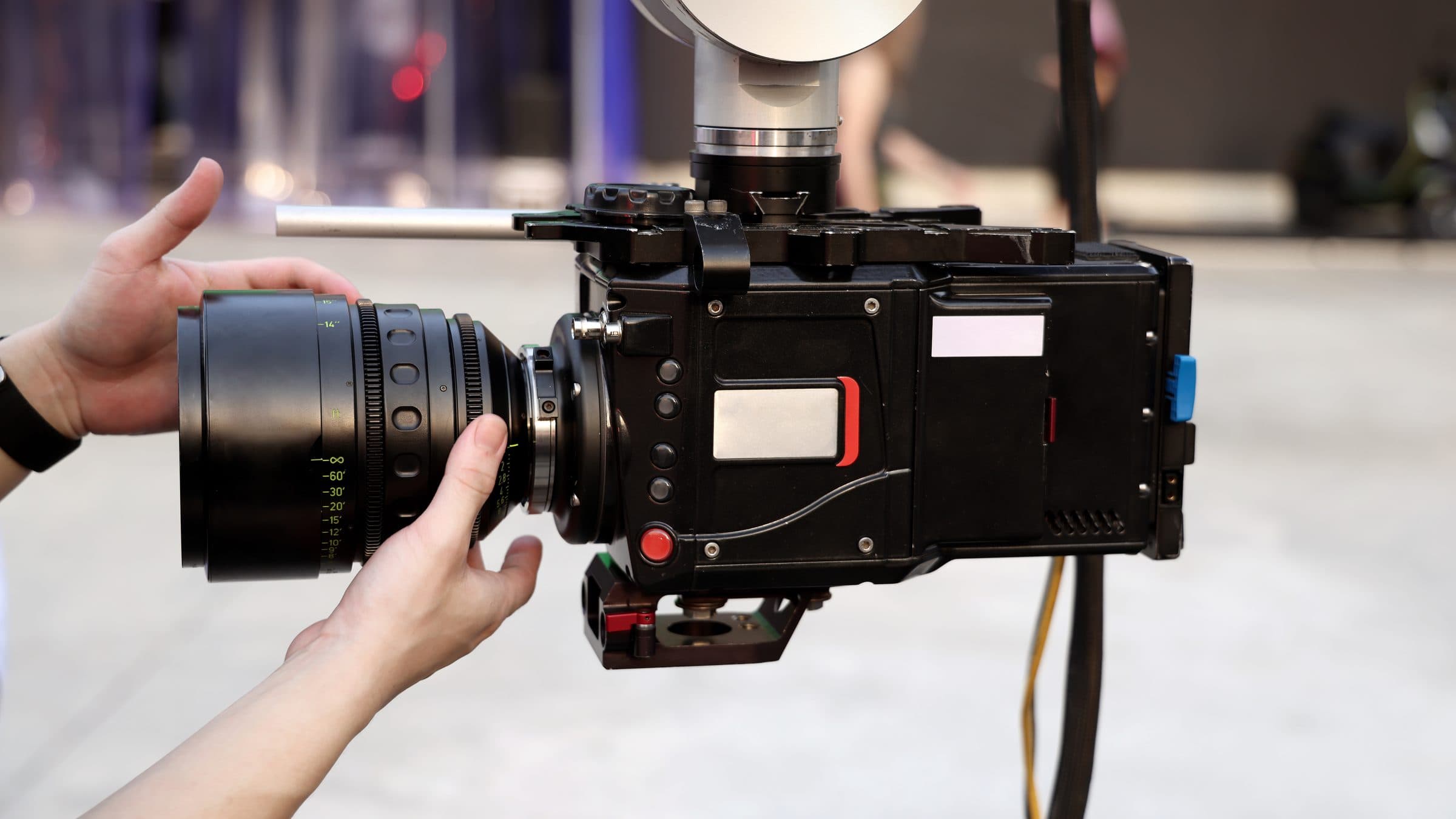
The 1st AC — also called the focus puller — manages the camera department on set, pulls focus through every take, maintains and preps all camera equipment, and owns the lens package on most productions that cannot afford a rental house kit. That last part matters for the rate conversation: a working 1st AC is often bringing $15,000–$80,000 in equipment to every job, and the day rate rarely reflects it unless it is quoted separately.
Data here comes from IATSE Local 600 scale minimums, ProductionHub's 2025 camera department survey, Mandy.com benchmarks, No Film School rate surveys, and working 1st ACs in the AC Facebook Group and Reddit's r/cinematography communities.
Once you've read our findings, don't forget to calculate your own day rate with our free day rate calculator.
Rate Ranges by Experience Level
Entry 1st ACs — typically coming up from the 2nd AC position on corporate and branded content — land between $350 and $550 per day. ProductionHub's 2025 data puts the median freelance 1st AC day rate at $750, with senior ACs on commercial and narrative work pulling the average up significantly. The gap between entry and expert is wider in the camera department than in most other below-the-line roles, because the skill gap is genuinely wider.
Expert-tier 1st ACs — ten or more years of experience, feature and network television credits, a track record pulling focus on high-motion or complex blocking sequences — bill $1,400–$2,000 per day for labor before any equipment is added. At that level, the DP is often specifically requesting them by name, which changes the rate dynamic entirely. A DP who brings their own 1st AC has already made the hiring decision; the rate conversation is with the production, not with the DP.
ZipRecruiter's April 2026 data puts the average freelance 1st AC salary at $71,000/year. At 120 billable days — a realistic freelance volume once prep, travel, and slow periods are subtracted — that income requires a day rate of $592. A 1st AC billing $500/day who also brings a wireless follow-focus system and a lens kit, but folds both into that number, is running $15,000–$40,000 in equipment at a steep discount relative to what a rental house would charge.
The Camera Department Hierarchy
The 1st AC sits between the DP and the 2nd AC on set. The DP makes creative decisions about the image; the 1st AC executes the focus and manages the physical camera; the 2nd AC loads magazines or cards, slates takes, maintains paperwork, and supports the 1st AC. On larger productions, a DIT handles data management and on-set color. Understanding the full stack clarifies what the 1st AC is responsible for and why the rate reflects it.
Second AC / Clapper Loader
Loads camera magazines or manages media cards, operates the clapperboard, marks actors, maintains camera reports, and supports the 1st AC during setup and between takes. On larger productions, manages the lens inventory and keeps the AC cart organized. $300–$550/day. The 2nd AC is the entry point into the camera department for most working 1st ACs — the path runs 2nd AC to 1st AC over several years of set experience.
DIT (Digital Imaging Technician)
Manages the data pipeline on set: offloading camera cards, verifying checksums, generating dailies, and applying on-set looks in coordination with the DP and colorist. On high-end commercial and narrative work, the DIT also operates a calibrated monitor village and manages the LUT workflow. $500–$900/day. The DIT role overlaps with the camera department but sits outside the traditional AC hierarchy — it is a parallel track, not a step up from 2nd AC.
1st AC (Small Crew)
On productions without a dedicated 2nd AC, the 1st AC also handles slating, camera reports, and media management in addition to pulling focus. Two jobs. Common on branded content, documentary, and smaller commercial work. $500–$900/day for this combined scope, which undersells the role on any production that runs more than a single camera or a full shooting day.
1st AC (Mid Crew)
A dedicated focus puller working with a 2nd AC and, on larger shoots, a loader. The 1st AC focuses on the image — measuring distances, marking actors, managing the follow-focus system, and communicating with the DP about focus strategy for each setup. $800–$1,400/day. This is the structure on most commercial and mid-budget narrative work.
1st AC (Union / Large)
Full camera department on episodic television, studio features, and large commercial productions. Multiple cameras, complex blocking, and a lens package representing hundreds of thousands of dollars in glass. The 1st AC manages a department, maintains the equipment, and is ultimately responsible for every frame being in focus. $1,200–$2,000/day at non-union rates; union scale on IATSE-covered productions runs at and above this range with overtime.
Rates by Production Type
Production type determines what equipment a 1st AC needs to bring and how complex the focus work will be. A branded content interview — fixed camera, static subject, controlled lighting — demands far less than a handheld commercial with moving talent, multiple focal lengths, and a director who changes blocking between takes. The rate should reflect that difference.
| Production Type | Day Rate Range | Notes |
|---|---|---|
| Social / creator content | $200–$400 | Often camera-op/AC combined; minimal or no lens kit required |
| Corporate / branded content | $400–$650 | Most consistent freelance volume; interview setups, fixed lenses |
| Commercial (non-union) | $550–$950 | Agency-directed; multiple lenses, wireless FF expected |
| Narrative (non-union) | $500–$850 | Long days standard; complex blocking and moving shots |
| Music video | $550–$1,000 | Variable; treatment drives complexity more than budget |
| Commercial (national / AICP) | $950–$1,600 | Full lens kit and Preston expected; 2nd AC standard |
| Episodic TV (non-union) | $750–$1,200 | Day-to-day consistency; multi-camera setups common |
| Episodic TV (union / IATSE 600) | $1,100–$1,800 | Scale minimums; full camera dept, overtime on 12+ hour days |
National commercial work is where 1st AC rates separate from the rest of the market. Agency-directed productions with multiple cameras, high-motion sequences, and talent who do not hold marks require a Preston MDR system, a full lens kit, and a 2nd AC to manage the cart while the 1st AC is focused entirely on the image. Productions that bring their own camera package from a rental house still need the 1st AC's labor rate and ancillary kit — the two are priced separately.
Equipment Package: The Second Income Line
1st ACs who own a lens kit and a wireless follow-focus system have a second income stream that most undervalue. Equipment rental is a separate line item on the production budget. A 1st AC who brings a Preston MDR4, a matched set of primes, and an AC cart — and folds all of it into their day rate — is operating a rental business at a significant discount to what a rental house charges for the same gear.
| Package | Rental Rate | Typical Contents |
|---|---|---|
| Basic AC kit | $100–$200/day | Depth of field tools, lens cleaning kit, measuring tape, marking disks, expendables |
| Wireless follow focus system | $200–$400/day | Preston MDR4 or Tilta Nucleus-M, motor, handset, start/stop trigger |
| Small lens kit (3–5 primes) | $300–$700/day | Rokinon DS, Sigma Cine, or Zeiss CP.3 — matched set in common focal lengths |
| Mid lens kit + FF + cart | $700–$1,400/day | Cooke S4 or Zeiss Master Primes, full Preston system, AC cart, monitor package |
| Feature lens package | $1,000–$2,500/day | Spherical or anamorphic primes (Leica Summilux, Panavision), full cart, ancillary glass |
A Preston MDR4 wireless follow-focus system costs $8,000–$12,000 new. A matched set of five Zeiss CP.3 prime lenses runs $15,000–$25,000. A set of Cooke S4 primes — the standard on mid-to-high-budget commercial and narrative — costs $40,000–$80,000 or more to assemble. The standard rental formula of 10–15% of replacement value per day puts a Cooke S4 set at $4,000–$8,000/day in replacement-cost terms. Most 1st ACs charge a fraction of that. Even a $500–$700/day lens package rate is not aggressive — it is the market acknowledging that you are providing what a rental house would charge significantly more for.
The Preston MDR: the non-negotiable
The Preston MDR (Motor Drive and Receiver) is the industry standard wireless follow-focus system on commercial and narrative productions. It is not optional on most jobs above the corporate and branded content tier. A 1st AC without a Preston — or a comparable Heden or Tilta system — cannot book most commercial work, regardless of their focus-pulling ability. The system should be quoted as its own rental line on every production that requires it. At $200–$400/day, it pays for itself in a few bookings and becomes pure income after that.
Lenses as inventory
A working lens kit is a capital investment that appreciates in booking power faster than it depreciates in value. A matched set of primes that rents for $300–$700/day makes a 1st AC competitive for commercial and narrative work that would otherwise require the production to rent glass from a house. Price the kit separately at 10–15% of replacement value per day. Productions expect to pay for glass. A 1st AC who provides it and does not charge for it is subsidizing the camera budget.
Gear rental and taxes
Equipment rental income is reported separately from labor income and can offset depreciation on the gear. Keeping kit rental separate from your day rate on every invoice has practical and tax benefits — it lowers taxable labor income while creating a deductible asset category. A production-focused accountant can set this up correctly.
Kit worth owning
- Tilta Nucleus-M wireless follow focusAmazon →
A wireless follow focus you can rent out on every job that doesn't bring its own.
- Shurtape P-665 gaffer tape and 1-inch paper tapeAmazon →
The real tape. Cheap tape leaves residue on rental gear, and rental houses notice.
- PEC*PAD wipes and Eclipse cleaning fluidAmazon →
The lens-cleaning standard. Safe on coatings you don't own.
- Giottos Rocket blowerAmazon →
On every AC's belt. Dust off a sensor or lens without touching it.
- Leatherman Wave+Amazon →
The multitool ACs carry. You'll use it ten times a day.
- Bosch GLM laser measureAmazon →
Fast, accurate focus marks without a tape on long lenses.
As an Amazon Associate, The Rate Guide earns from qualifying purchases. These links cost you nothing extra. Everything here is gear working crews use and clients expect to see.
Union Scale: IATSE Local 600
IATSE Local 600, the International Cinematographers Guild, covers directors of photography, camera operators, and first and second ACs on union productions. The same Local that covers the DP covers the 1st AC — which means the rate floor, overtime rules, and benefit contributions are all governed by the same Basic Agreement.
Local 600 first AC scale under the AMPTP Theatrical Agreement runs approximately $55–$75/hour depending on the contract tier and production category. On a standard 10-hour day, that is $550–$750 at straight time. Overtime on a 12-hour day pushes total daily earnings to $800–$1,100 or more. Union productions also contribute to the IATSE health and pension plan on top of the scale rate — which adds 25–30% to the total labor cost for the production, and represents real value to the 1st AC that non-union day rates do not include.
Most freelance 1st ACs outside Los Angeles and New York work non-union. The path to Local 600 membership typically runs through either the Qualification List — logging enough days on productions that become IATSE-signatory — or direct sponsorship by a working DP who wants their 1st AC on a union show. Local 600 scale is still useful as a reference point for non-union negotiations: a non-union 1st AC billing substantially below union scale for equivalent work is subsidizing the production.
The Hidden Costs 1st ACs Forget to Price
1st ACs carry equipment overhead and prep time that most other crew roles do not. The cost of owning a working lens kit is not just the purchase price — it is calibration, maintenance, insurance, and the capital tied up in glass that is sitting on a shelf when it is not on a job.
Lens calibration and collimation
Lenses need to be calibrated periodically to ensure focus marks are accurate and back focus is consistent across the set. A lens that is front-focusing by half a stop will produce soft images even when the 1st AC hits the mark perfectly. Professional calibration costs $75–$200 per lens. A set of eight primes calibrated twice a year is $1,200–$3,200 in annual maintenance that needs to be priced into the rental rate.
Insurance
A lens kit worth $30,000 needs to be insured. Production insurance covers equipment on specific productions; it does not cover your kit between jobs or during transit. An inland marine policy for a $30,000–$80,000 equipment package runs $600–$2,000/year depending on coverage limits and deductibles. That cost belongs in the rental rate, not absorbed into the day rate.
Camera prep days
Every production with a rental camera package requires a prep day: checking all lenses against the camera body, verifying focus marks, calibrating the wireless follow-focus, building the AC cart configuration for the specific rig, and testing every piece of equipment before it goes to set. Prep days should be billed at full day rate. A 1st AC who absorbs camera prep into their shoot-day rate is working unpaid hours on every production that requires it — which is most of them.
Wrap and camera reports
The day the shoot wraps is not the end of the work. Lenses need to be cleaned, inventoried, and packed. Camera reports need to be completed and delivered. On productions where the 1st AC also handles data management, there is media offload and verification on top of that. Wrap time belongs on the contract as either a half-day rate or a clause that the production day does not end until the camera package is secured and reports are filed.
Six Mistakes That Keep 1st ACs Underpaid
1. Folding the lens kit into the day rate
The most expensive error in the camera department. A single day rate that covers labor and glass makes it impossible for the client to understand what they are paying for — or to value either component correctly. Separate quotes protect both. A production that needs to trim the budget can downsize the lens package. They cannot cut the 1st AC's labor rate once it is established as its own line.
2. Not charging for the Preston separately
A Preston MDR4 is a $8,000–$12,000 piece of equipment that the production would rent from a camera house for $200–$400/day if you did not bring it. If you bring it and do not charge for it, you are renting it to them for free. Quote the wireless follow-focus as its own line item on every production that uses it, the same way a sound mixer quotes their wireless transmitters.
3. Not billing for camera prep
Camera prep is billable work. The 1st AC who spends five hours at a camera house checking lenses, building a rig, and calibrating a follow-focus system before a single frame is shot has done a full half-day of skilled labor. Bill it. Productions budget for prep days — they are a standard line item on any camera package deal. A 1st AC who does not ask for prep pay is the only person in the camera department working that day for free.
4. Underpricing because the DP is a friend
Working with a DP you have a relationship with is how most 1st ACs build their career. It is also how rates get stuck. A friend who hires you repeatedly has a number in their head from the first time you worked together. New DPs set a fresh anchor. Quote your current market rate to every new DP relationship. The rate you charge a friend from film school is not your rate — it is a favor that compounds into a below-market position if you never correct it.
5. No signed deal before camera prep begins
The moment you schedule a camera prep, you are committed to the production. Without a signed deal memo, the rate, the kit rental, the prep day billing, and the overtime terms are all verbal. Productions know this. A 1st AC who shows up to prep without a signed agreement has already lost the leverage to negotiate any of those terms. Get it in writing before you step into the camera house.
6. Not raising rates after major credits
A credit on a network series, a studio feature, or a national campaign is a credential that changes what the market will pay you. Existing DPs have a number from the last time you worked together. New DPs and productions set a fresh anchor. Quote the higher rate to every new relationship. The fastest path to a market-rate career is not renegotiating with people who already have a comfortable number — it is quoting correctly from the start with everyone new.
Find the day rate that covers what you need to clear
Enter your take-home goal. The calculator adds self-employment tax, health insurance, and an optional profit margin — then shows you the day rate you need to clear it. Compare that number against the first AC ranges above to see where you land.
Calculate My RateYour kit rate and your labor rate should be two separate lines — and both should be in writing
A booking that bundles your focus pulling, your wireless follow-focus system, and your lens kit into one number makes all three negotiable as a unit. The Rate Guide's Contract Pack is six ready-to-send documents — services agreement, quote sheet, change order, invoice, and email templates, all in plain English — for $9.99.
View the Contract Pack →- IATSE Local 600 — International Cinematographers Guild
- ProductionHub — 2025 Camera Department Rate Survey
- Mandy.com — First AC Rate Data 2025
- ZipRecruiter — First AC Salary (April 2026)
- No Film School — Camera Department Rate Discussion
- Crew Connection — 2025 Rate Survey
- Stage 32 — Camera Department Rate Threads