How to Charge a Kit Fee Without Giving Away Your Gear
A practical guide to separating labor from equipment, building a defensible rental rate, pricing consumables, and handling insurance, damage and multi-day jobs.
By The Rate Guide StaffRates13 min readUpdated Oct 202612 sources
In this article · 19 sections
- A kit fee is equipment rental
- Keep labor and equipment on separate lines
- Decide what the labor rate already includes
- “Kit” and “expendables” are not the same
- Build an inventory before setting a rate
- Replacement value is an input, not the rate
- Calculate what the package costs you to own
- Check comparable rentals
- Set a daily package rate
- Decide how multi-day pricing works
- Price the package the project needs
- Insurance must be explicit
- Assign loss and damage responsibility in writing
- Do not replace wages with kit rental
- Treat kit income as business income
- A worked pricing example
- When a client pushes back
- Before sending the quote
- Your kit is a business asset
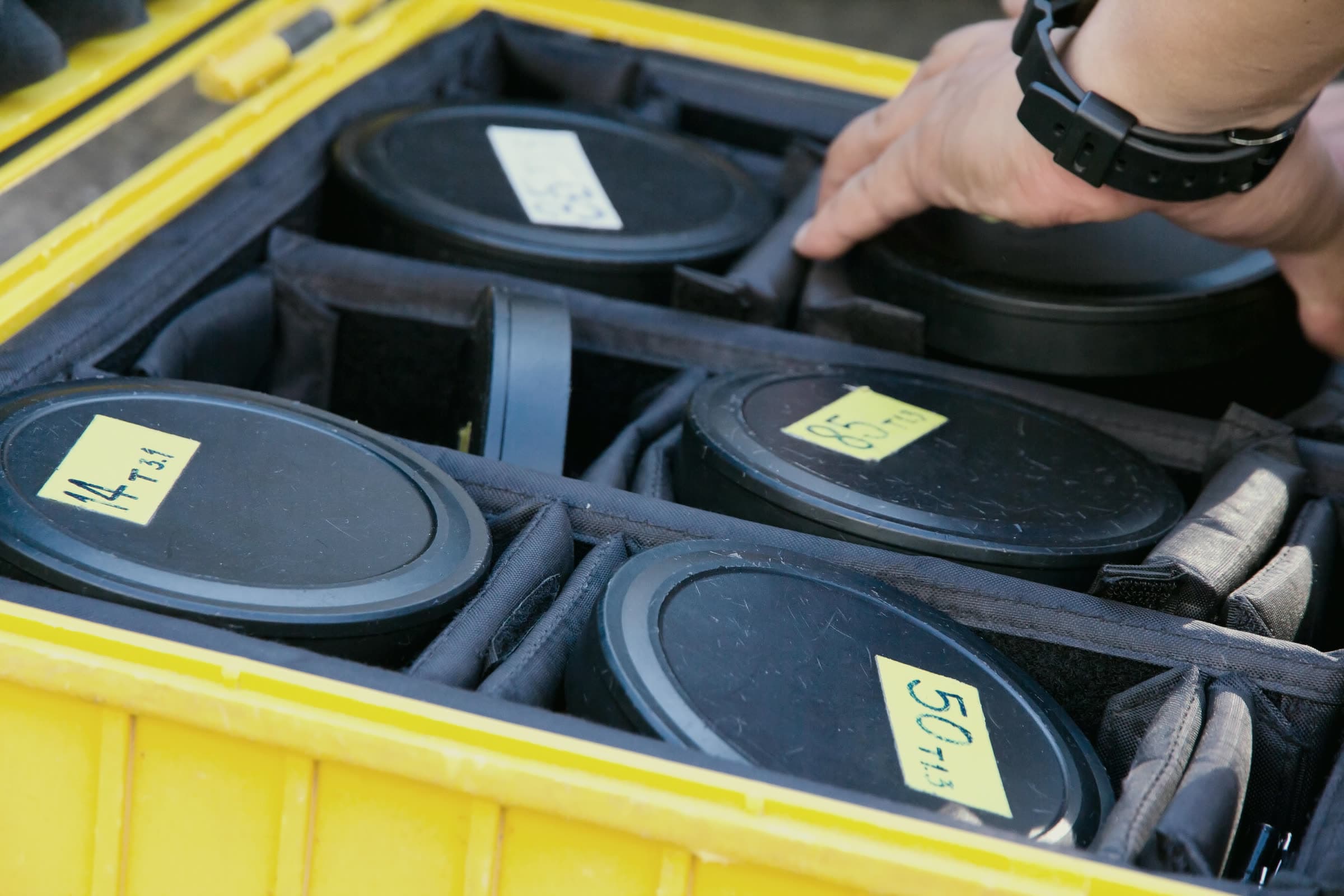
Your day rate pays for your work. It does not rent everything you own.
A sound mixer may arrive with a recorder, microphones, wireless channels, IFBs, timecode boxes, batteries and a cart. A gaffer may bring fixtures, stands, cable, distribution and a van. An HMU artist may carry thousands of dollars in tools and product.
If production would otherwise need to rent or buy those items, the equipment has value separate from the person operating it.
That does not mean every object in your bag deserves a rental line. It means you should decide what your labor rate includes, what constitutes a billable package and what gets consumed by the job. Without that distinction, “bring your kit” can become an open-ended request for free equipment.
A kit fee is equipment rental
“Kit fee,” “box rental,” “equipment package” and “gear rental” are often used for the same idea: the client pays to use equipment you own for the duration of the job.
The word kit can obscure the transaction. You are temporarily putting business property into production service. That property costs money to buy, maintain, insure, store and replace. While it is committed to one production, you cannot rent or use it elsewhere.
Thinking like a small rental business changes the questions you ask:
- What exactly is included?
- What would comparable equipment cost locally?
- How many days will the client control it?
- Who bears loss, damage and insurance risk?
- What happens if the rental extends?
- Which items return and which are consumed?
A single unexplained line reading “kit — $250” answers none of them.
Keep labor and equipment on separate lines
Suppose a sound mixer quotes $1,200 all-in. One producer may understand that as $800 labor and $400 equipment. Another may record $1,200 as the mixer’s labor rate and expect the same gear every time.
Separate lines preserve both values:
Production sound mixer labor — $800/day
Standard sound package — $400/day
If the next job requires production to supply the equipment, the labor rate does not collapse. If it requires additional wireless channels, the package can grow without pretending the mixer’s time became more expensive.
This separation also makes budget conversations more useful. A client can reduce the package, cross-rent a specialty item or supply its own equipment. They cannot make a necessary operator less skilled by removing a lens.
Decide what the labor rate already includes
Not every personal tool should generate a fee.
Many trades have a basic set of ordinary hand tools associated with performing the job. A tape measure, multitool, pens or headphones may function more like the worker’s ordinary tools than a production rental package. Where that line falls depends on the role, market and governing agreement.
A useful test is whether the item:
- Substitutes for something production would otherwise rent or purchase
- Has meaningful replacement, maintenance or insurance cost
- Is specified or requested for the project
- Expands what the production can accomplish
- Is placed at material risk while serving the production
- Can be described as a coherent package
A personal laptop used occasionally for email is not automatically a post suite. A calibrated display, licensed software, fast storage and a workstation used to finish client media may be.
For employees and union crew, do not invent the boundary alone. The applicable collective bargaining agreement, local practice or employer policy may define required tools and kit rentals. IATSE advises members to review kit-rental policies, deal memos and questions with their business agent. IATSE member guidance
“Kit” and “expendables” are not the same
A rental item is expected to return. An expendable is used up, altered or left with the production.
Rental items
- Camera bodies and lenses
- Recorders, microphones and wireless systems
- Monitors and timecode boxes
- Lighting fixtures and stands
- Carts, cases and support
- Calibrated displays and workstations
- Reusable brushes, tools and airbrush equipment
Expendables and consumables
- Batteries that are not rechargeable
- Tape, black wrap and gels cut for the job
- Makeup product and disposables
- Hard drives delivered to the client
- Media labels and shipping materials
- Cleaning supplies consumed unusually by the production
Do not make the kit fee perform two incompatible jobs. If a $400 sound package also has to absorb $90 in batteries every day, the actual equipment rental is only $310.
You can bill expendables at documented cost, at cost plus an agreed handling charge, or as a reasonable flat allowance when consumption is predictable. State which method you are using.
The IRS likewise distinguishes durable equipment from materials and supplies: business equipment may be recovered through depreciation, while qualifying materials and supplies are generally deducted as they are consumed. That is tax treatment, not a pricing formula, but it reflects the same economic difference. IRS Schedule C instructions
Build an inventory before setting a rate
You cannot price a package you have never defined.
Create an inventory with:
- Item and model
- Quantity
- Serial number where applicable
- Current replacement cost
- Purchase date and cost
- Condition
- Accessories required to make it usable
- Maintenance or calibration schedule
- Insurance value
- Individual rental replacement rate, if relevant
Include the unglamorous pieces. A camera body is not a usable package without power, media, support, cases and cables. A wireless channel is not merely a transmitter. A lighting fixture may require a stand, modifier, ballast, header cable and distribution.
The inventory serves three purposes. It lets you price the package, tells the client what they are receiving and creates a record if something does not come back.
Replacement value is an input, not the rate
You will hear rules such as “charge 10 percent of replacement value per day.” Applied universally, they produce implausible results.
A $50,000 package at 10 percent would rent for $5,000 a day. Some specialized packages may support that price. Many published camera, grip and sound rentals do not. Equipment categories depreciate at different speeds, require different maintenance and face different local competition.
Rental houses publish market evidence. For example, Los Angeles rental listings show different daily relationships between price and equipment class, while multiple professional houses use a three-day billing week for many cinema rentals. Chill Rental published rates NGP Film rental policy
There is no single percentage that replaces checking the market.
Use replacement value to understand how much capital is at risk and how much eventual replacement must be funded. Then test the result against comparable rentals and the actual usefulness of your package.
Calculate what the package costs you to own
The purchase price is only the beginning.
Estimate annual ownership costs such as:
- Depreciation and obsolescence
- Insurance
- Maintenance and repair
- Calibration
- Software and firmware-dependent accessories
- Storage
- Cases and organization
- Financing cost
- Cleaning and prep labor not billed elsewhere
- Administrative time
- Losses and deductibles
Then estimate realistic paid rental days—not shoot days in an ideal year.
If a $20,000 package costs approximately $8,000 a year to own, maintain and eventually replace, and you expect 40 paid package days, the ownership cost is already $200 per paid day before profit, taxes or extraordinary damage risk.
That does not prove the market will pay $200. It tells you what charging $75 would mean.
Equipment used in a trade or business can generally be depreciated under tax rules, but depreciation is a method of recovering basis for tax purposes. It is not cash in a replacement account and does not tell you what to charge. IRS Publication 946
Check comparable rentals
Price the package the client would need to replace, not merely the individual products you happen to own.
Look at:
- Local rental houses
- Regional owner-operators
- Published peer-to-peer listings
- Vendor quotes for an equivalent package
- Union or employer schedules that apply to the engagement
Match the comparison carefully. A bare camera body is not comparable to a working camera package. A low online price may exclude insurance, prep, delivery, media or essential accessories. A large rental house may offer volume discounts that an owner-operator cannot reproduce.
Also ask whether your package provides value beyond the hardware:
- It is already tested and configured
- You know its failure modes
- It travels with the operator
- It avoids a separate pickup and return
- It reduces compatibility risk
- It includes specialized accessories unavailable locally
Those advantages matter. They do not justify a price the market will not bear, but they explain why your package need not be cheaper than every rental-house line item.
Set a daily package rate
A defensible daily rate sits at the intersection of:
- The package’s cost and risk
- Comparable local rental prices
- The value of having the equipment configured and operator-attended
- Expected utilization
- The production’s actual requirements
Document the contents next to the rate:
Standard sound package — $500/day
Includes recorder, mixer, boom microphone and pole, four wireless talent channels, two timecode boxes, one camera hop, headphones, power and cabling.
Then price additions:
Additional wireless talent channel — $75/day
Additional timecode box — $35/day
IFB receiver — $25/day each
This is more useful than calling everything a “full kit.”
Decide how multi-day pricing works
Professional rental houses commonly discount continuous rentals. A three-day week means the renter receives up to seven continuous days for three daily charges. Several film-equipment houses publish that structure. Triad Camera NGP Film
That convention is evidence, not an obligation.
An owner-operator should consider:
- Whether the equipment remains continuously unavailable
- Whether the package is working every day
- Length and certainty of the booking
- Prep and check-in work
- Wear created by the production
- Whether a discounted week is necessary to remain competitive
- Whether specialty additions receive the same discount
If you offer a three-day week, state it:
Equipment package bills on a three-day week for seven continuous calendar days. Added equipment and expendables are billed separately.
Do not let the client infer a weekly discount after approving daily rates.
For irregular bookings, define what counts as continuous. A Monday shoot and a Friday shoot may control the package all week even if the camera is idle on Tuesday.
Price the package the project needs
A kit should not grow indefinitely at the same rate.
Create tiers or a base package with additions.
Sound example
Base package: recorder, boom, two wireless talent channels and timecode.
Additions: more wireless, IFBs, camera hops, playback, plant microphones or specialty RF coordination.
Camera example
Base package: body, power, media, support and monitoring.
Additions: lens set, wireless video, gimbal, specialty filtration, client monitor or additional body.
HMU example
Base kit: reusable tools and a defined standard product range.
Additions or consumables: specialty prosthetics, wigs, custom color orders, high-volume disposables and products purchased specifically for talent.
Grip or electric example
Base package: an itemized small package.
Additions: truck, generator, lift, dolly, large fixtures, specialty rigging and job-specific expendables.
The point of tiers is not to upsell. It is to stop a rate designed for a basic interview from absorbing a commercial package.
Insurance must be explicit
Owning an insurance policy does not mean every rental, location, transit method or cause of loss is covered.
Before the job, determine:
- Whether your policy covers equipment while rented or used professionally
- Whether production must provide rented-equipment coverage
- Required certificate of insurance language
- Coverage limit and replacement value
- Deductible responsibility
- Transit coverage
- Theft-from-vehicle conditions
- Unattended-equipment exclusions
- International or hazardous-use exclusions
- Who files and controls a claim
Rental houses commonly require proof of appropriate equipment insurance before release. Chill Rental policy ShareGrid’s owner guarantee also uses replacement-value limits and exclusions, illustrating why platform protection is not identical to blanket insurance. ShareGrid Owner Guarantee
Do not write “production insurance covers it” without verifying the policy and endorsement. Ask for the certificate before the equipment leaves your control, not after a loss.
An insurance broker familiar with production equipment should review the actual exposure. A generic liability policy may not insure your gear.
Assign loss and damage responsibility in writing
The quote should identify the equipment and price. The agreement should address responsibility.
Clarify:
- Rental period and point of transfer
- Authorized users
- Prohibited uses
- Security and storage expectations
- Inspection at handoff and return
- Loss, theft and damage
- Repair or replacement standard
- Loss of use while equipment is being repaired
- Deductible responsibility
- Late return or extension
Do not improvise a punitive damage clause. Use terms reviewed for your business and jurisdiction.
Take condition photos for meaningful packages. Maintain serial numbers. Report damage promptly. A line item reading “camera kit” is poor evidence of what was actually entrusted to the production.
Some collective agreements address this directly. One IATSE agreement, for example, requires the employer either to insure specified employee-furnished equipment against fire and theft or reimburse loss or damage. That provision is not universal, but it demonstrates that kit rental and equipment risk are separate subjects. IATSE Local 675 agreement
Do not replace wages with kit rental
Labor and equipment remain separate even when the client pays both to the same person.
A production should not reduce an employee’s wage below the applicable rate and make up the difference with “kit rental.” Equipment payments may receive different payroll or tax treatment, and a kit fee does not erase wage, overtime, benefit or classification obligations.
Worker status depends on the real relationship. The IRS considers behavioral control, financial control and the parties’ relationship; a label in the deal memo does not decide it. IRS worker-classification guidance
Union crew should confirm kit arrangements with the relevant local and deal memo. Independent contractors should keep the labor price defensible without equipment and the equipment price defensible without labor.
Treat kit income as business income
The equipment line is revenue, not a reimbursement of the purchase price.
The IRS states that a person in the business of renting personal property such as equipment generally includes the rental amount in business gross receipts. IRS Publication 334
Keep records of:
- Kit income by project
- Asset purchases
- Repairs and maintenance
- Insurance
- Consumables
- Depreciation or other tax treatment
- Losses and reimbursements
- Sales or disposal
State and local tax treatment can differ. Equipment rental may implicate sales or use tax depending on the jurisdiction and how the property was purchased. California’s rental-company guidance, for example, applies different treatment depending in part on whether tax was paid on the equipment purchase and how the property is leased. California CDTFA rental guidance
Do not copy another freelancer’s invoice treatment. Ask a qualified tax professional about the jurisdictions where your equipment is rented and used.
A worked pricing example
Assume a freelancer owns a defined $20,000 equipment package.
Their estimated annual ownership costs are:
| Cost | Annual estimate |
|---|---|
| Obsolescence and replacement reserve | $5,000 |
| Insurance | $900 |
| Maintenance and repair | $900 |
| Storage, cases and administration | $1,200 |
| Total annual ownership cost | $8,000 |
At 40 paid kit days, the package must earn $200 per paid day merely to cover those assumed annual costs. That calculation does not include profit, taxes or an extraordinary uninsured loss.
Next, the freelancer finds equivalent local packages at $350–$500 per day, depending on accessories. They set:
Standard package — $425/day
Three-day week for seven continuous days
Specialty additions priced separately
Consumables billed separately
This is not a universal answer. Change the utilization assumption to 20 paid days and the cost floor doubles. Change the equipment category and the market comparison changes. The exercise exposes what must be true for the rate to work.
When a client pushes back
“Your day rate should include your gear.”
“The labor rate covers my work. The package is equipment production would otherwise need to rent, so I list it separately.”
“We only need a basic kit.”
“That works. Let’s identify the channels and accessories you need and remove the rest of the package.”
“The other operator includes a camera.”
“They may structure their price differently. My quote separates the operator from the equipment so you can compare the actual scope.”
“Can you throw in one more wireless?”
“The base package includes four channels. I can add the fifth at $75 per day.”
“It’s a five-day job, so can you discount the kit?”
“The package uses a three-day billing week for seven continuous days. Labor remains at the agreed daily or weekly rate.”
Specific answers work better than defending the abstract idea of a kit fee.
Before sending the quote
Confirm:
- Labor and equipment are separate
- The base package is itemized
- Optional additions have rates
- Expendables are separate from rentals
- Daily and weekly billing rules are stated
- Prep, pickup and return labor are addressed
- Rental dates are clear
- Replacement values and serials are documented privately
- Insurance requirements are confirmed
- Loss, damage and deductible responsibility are in the agreement
- Taxes are handled correctly for the jurisdiction
- Discounts appear as discounts rather than altered labor rates
Then ask the simplest question: if production declined your package, what would it cost them to obtain a genuinely comparable one?
That answer will not set your rate by itself. It will reveal whether you are charging for a professional rental or quietly donating business property to the job.
Your kit is a business asset
A kit fee is not a reward for buying gear. Clients do not owe you a return on a bad purchase.
They pay when your equipment serves the production.
Build a package the project needs. Price it against the market. Make sure the rate can support ownership. Separate what returns from what gets consumed. Document the equipment and put the risk terms in writing.
Your labor should remain valuable without the kit. Your kit should remain valuable without pretending it is labor.
Sources
- AICP standardized production-bid resources
- Chill Rental, published cinema-equipment rates and insurance requirement
- NGP Film, rental periods, three-day weeks, incidentals and rental terms
- Triad Camera, three-day weekly rental convention
- ShareGrid Owner Guarantee, replacement-value limits and exclusions
- IATSE member guidance on kit-rental policies and deal memos
- Example IATSE agreement addressing employee-furnished kit rental and insurance
- IRS Publication 946, depreciation of business equipment
- IRS Schedule C instructions, equipment, repairs, materials and supplies
- IRS Publication 334, personal-property rental income
- IRS worker-classification guidance
- California Department of Tax and Fee Administration, equipment leases